Overview
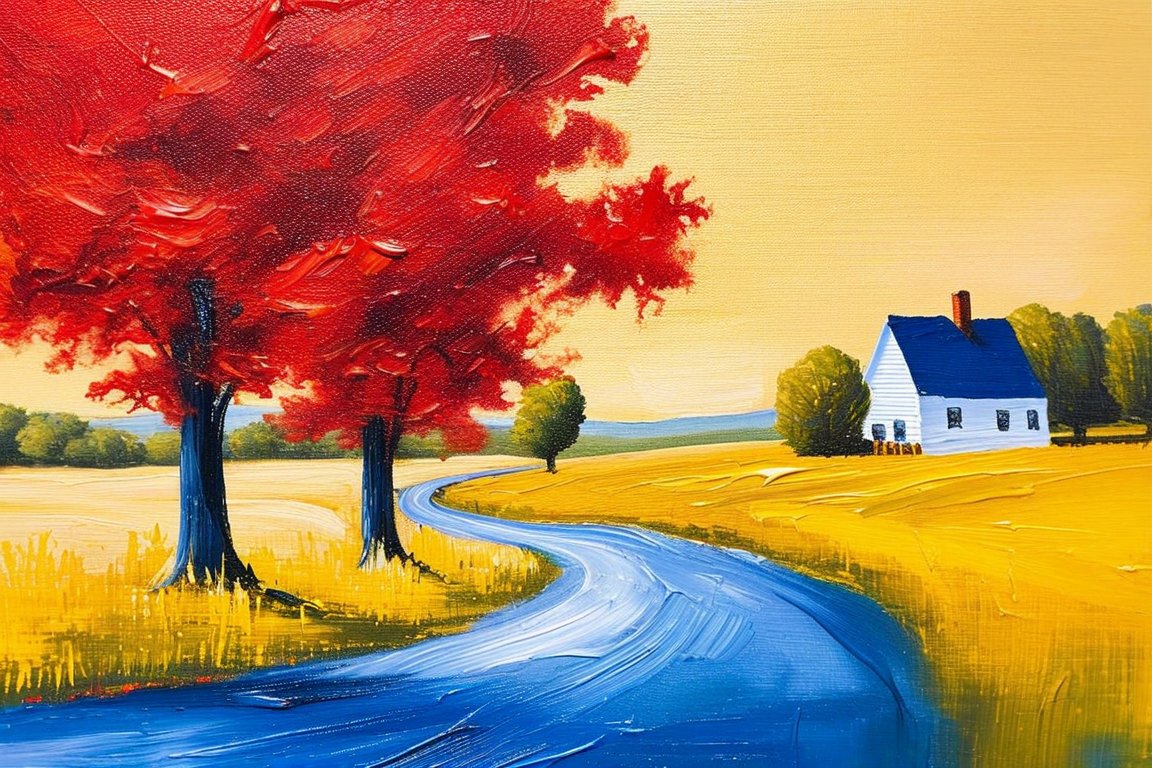
Let's embark on a creative journey to paint a captivating landscape using just three colors in only 30 minutes! This exercise is fun because it challenges your creativity and accelerates your decision-making. Beginners often struggle with color mixing and brushwork, but with patience, you'll find it incredibly rewarding.
Materials
- Acrylic paint: 15 ml (1 tbsp) each of primary red, primary blue, and primary yellow
- Canvas: 20 x 25 cm (8 x 10 inches)
- Palette for mixing colors
- Palette knife or an old credit card
- Brushes: 1 flat brush, 1 round brush
- Water container
- Paper towels or an old rag
- Optional: White paint for highlights
Time & Difficulty
- Total time: 30 minutes
- Active time: 30 minutes
- No curing/drying time necessary
- Difficulty: Beginner
Step-by-Step
- Set up your workspace with all materials within easy reach.
- Squeeze out a small amount of each color onto your palette.
- Mix colors to create a range of shades; combine blue and yellow for green, red and blue for purple, and red and yellow for orange.
- Sketch a simple horizon line on your canvas using a pencil or the edge of your palette knife.
- Apply a wash of the sky color with your flat brush, starting at the top and working downwards.
- Add layers of mountains or hills by mixing darker shades and using your palette knife for texture.
- Paint the foreground with a round brush, using greens and yellows for grass or fields.
- Introduce depth by layering different shades, starting with the lightest and moving to the darkest.
- Use the edge of your palette knife or a small brush to add details like trees or bushes.
- Highlight areas with optional white paint to give dimension and light.
- Step back and assess your work, making small adjustments as needed.
- Sign your masterpiece in a corner using a fine brush.
- Allow the painting to dry completely before displaying.
Pro Tips
- Mix colors on the canvas to save time and create natural gradients.
- Keep your brushstrokes loose and fluid to capture the essence of the landscape.
- Use a wet brush to blend colors seamlessly for a softer look.
Common Mistakes
- Using too much paint can muddy colors; clean your brush between colors.
- If the colors look flat, add contrast by darkening shadows and brightening highlights.
- If you run out of time, focus on large shapes and add details later.
Safety Notes
- Acrylic paint is non-toxic, but avoid ingestion and prolonged skin contact.
- Keep your workspace ventilated to avoid inhaling fumes.
Cleanup & Storage
- Rinse brushes in water immediately after use to prevent paint from drying on them.
- Wipe your palette knife clean with a paper towel.
- Store unused paint in airtight containers to keep them fresh for future projects.
Next Exercises
- Try painting a seascape using the same color limitations.
- Experiment with creating a cityscape silhouette at sunset.
- Practice mixing colors to match a specific photograph of a landscape.