Overview
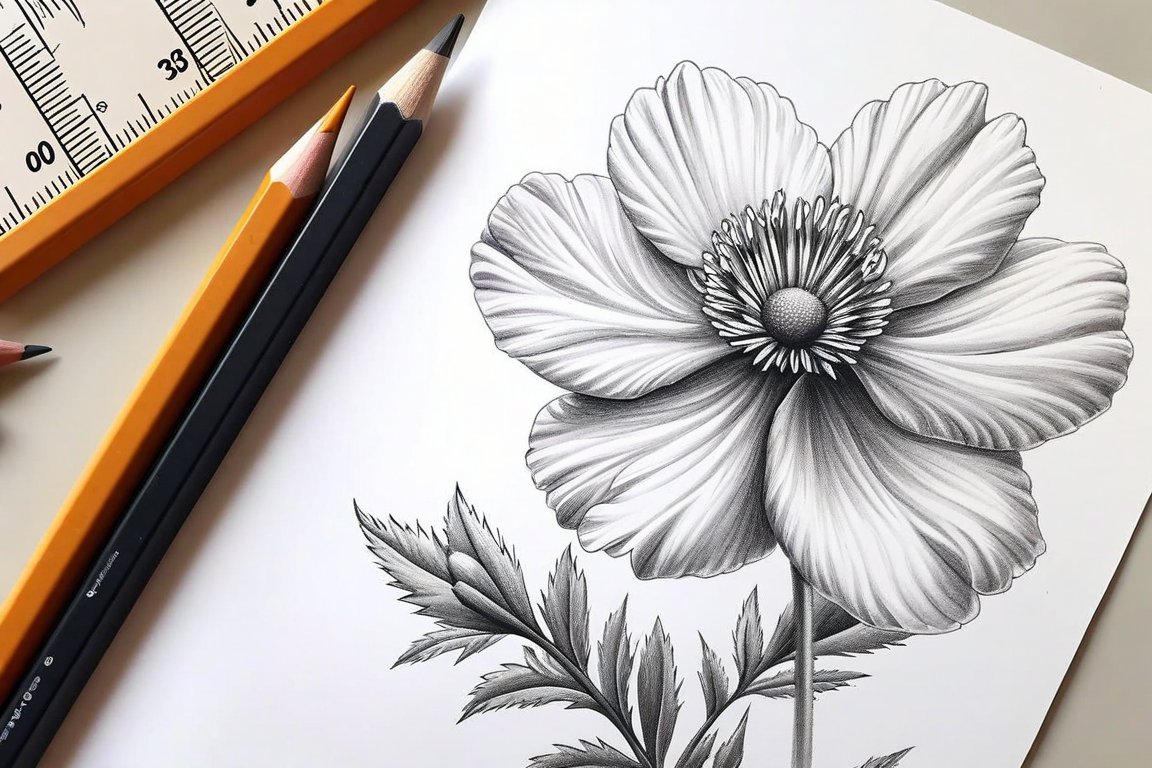
In this exercise, we'll create a detailed pencil sketch of a flower, focusing on line work, shading, and composition. It's a delightful practice that hones your observation skills and deepens your appreciation for nature's intricate designs. Beginners often struggle with proportion and shading, but with patience, you'll see improvement.
Materials
- Drawing paper (A4 or 21 x 29.7 cm)
- Graphite pencils (HB, 2B, 4B)
- Eraser (kneaded is preferable)
- Ruler (for composition layout)
- Blending stump or cotton swab (optional, for shading)
Time & Difficulty
- Total time: 30 minutes
- Active time: 30 minutes
- Curing/drying: Not applicable
- Difficulty: Beginner
Step-by-Step
- Select a reference flower, either from your garden or a photograph.
- Lightly sketch the basic outline of the flower with an HB pencil, focusing on overall shape and size.
- Refine your lines, paying attention to the natural curves and angles of petals and leaves.
- Use the ruler to check proportions, ensuring symmetry and balance in your composition.
- Add details to the petals, such as veins and edges, using a 2B pencil for darker lines.
- Shade the areas where petals overlap or where shadows naturally fall, starting with light strokes.
- Blend your shading with a blending stump or cotton swab, softening transitions between light and dark areas.
- Deepen shadows with the 4B pencil, enhancing contrast and depth in your sketch.
- Erase any stray marks or adjust lines for accuracy and clarity.
- Review your composition, making final adjustments to ensure a balanced and appealing sketch.
- Sign your artwork for a personal touch.
Pro Tips
- Rotate your paper to keep your wrist comfortable and maintain fluid lines.
- Keep a light touch with your pencil to easily adjust mistakes without harsh eraser marks.
- Step back periodically to view your work from a distance, gaining perspective on proportions and shading.
Common Mistakes
- Drawing too dark initially can make corrections difficult; start light and build up.
- Overblending can muddy your lines; maintain some crisp edges for detail.
- Ignoring light source can flatten your drawing; consistently apply shadows for a 3D effect.
Safety Notes
- Graphite dust can be inhaled; keep your workspace clean and ventilated.
- Be cautious with sharp pencils to avoid injury.
Cleanup & Storage
- Gently brush away eraser shavings with a soft cloth or brush.
- Store your sketch in a dry, flat place to prevent smudging.
- Keep your pencils and tools organized in a pencil case for easy access next time.
Next Exercises
- Try sketching a different flower species to explore various petal structures.
- Experiment with colored pencils for a vibrant flower study.
- Practice drawing leaves to complement your flower sketches.
Byline: Claire Stoneharbour