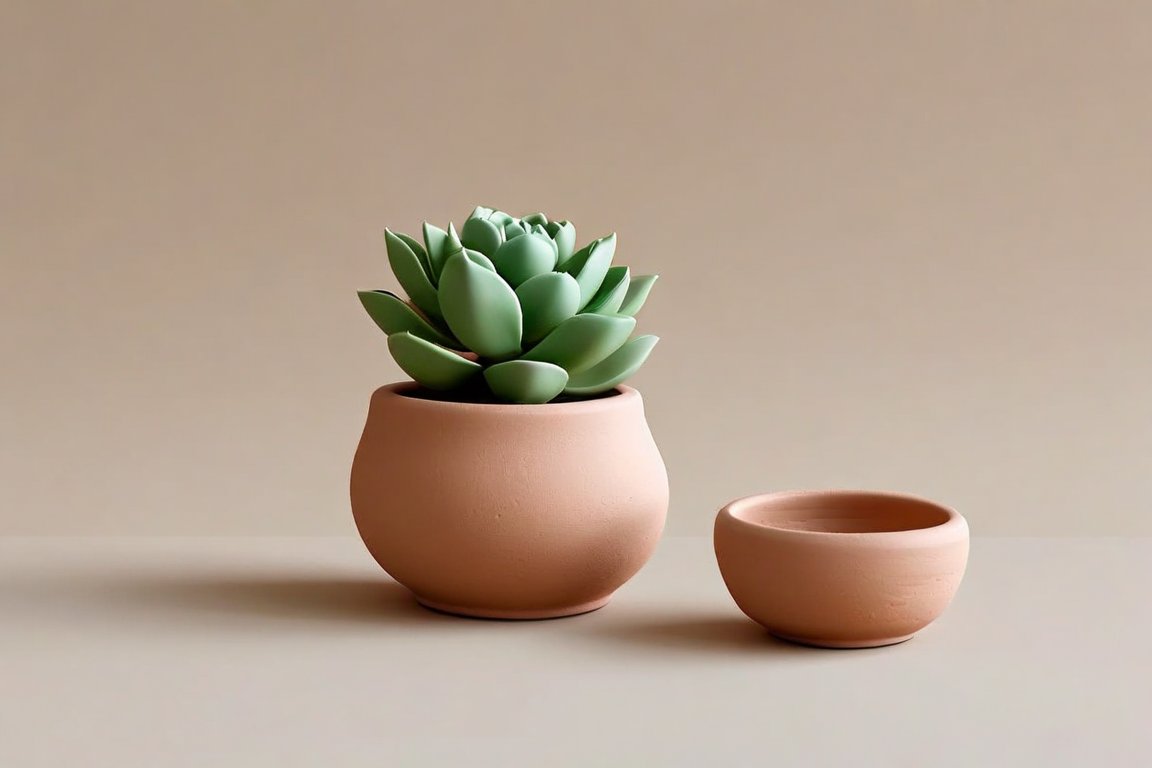
Overview
Welcome to the delightful world of hand-building with clay! Today, we'll create a small air-dry clay planter that's perfect for your favorite succulent or herb. This project is fun because it combines creativity with practical skills. Beginners often slip by rushing the drying process or not sealing the planter properly, but with patience and care, you'll craft a piece you'll be proud of.
Materials
- 500g (1 lb) of air-dry clay
- Clay sculpting tools or household items like a butter knife and a toothpick
- Small bowl of water
- Rolling pin
- Sandpaper (fine grit)
- Acrylic paint (optional)
- Paintbrushes
- Clear acrylic sealer
- Plastic wrap or damp cloth
Time & Difficulty
- Total time: 90 minutes
- Active time: 60 minutes
- Curing/drying time: 24-48 hours
- Difficulty: Beginner-friendly
Step-by-Step
- Prepare your workspace. Cover your table with a plastic sheet or newspaper to protect it from clay and paint.
- Condition the clay. Knead the air-dry clay until it's soft and pliable, about 5-10 minutes.
- Roll out the clay. Use a rolling pin to flatten the clay to about 0.5 cm (1/4 inch) thickness.
- Cut a base. Use a circular object, like a cup, to cut out a circle for the planter's base.
- Form the walls. Cut a long strip of clay about 5 cm (2 inches) wide and long enough to wrap around the base.
- Score and slip. Lightly score the edges of the base and the strip, then apply a bit of water to help them stick together.
- Attach the walls. Gently press the strip around the base, smoothing the joint with your fingers or a tool.
- Texture the surface. Use a toothpick or sculpting tool to add texture or patterns to the planter's surface.
- Let it dry. Cover lightly with plastic wrap or a damp cloth and let it dry slowly for 24-48 hours.
- Sand the edges. Once dry, gently sand any rough edges with fine-grit sandpaper.
- Paint your planter. If desired, paint your planter using acrylic paints and let it dry completely.
- Seal the surface. Apply a clear acrylic sealer to protect your design and make the planter water-resistant.
- Enjoy your creation. Once everything is dry and sealed, your planter is ready to use!
Pro Tips
- Keep unused clay covered with plastic wrap to prevent it from drying out.
- Experiment with different textures using household items like forks or leaves.
- If your clay cracks while drying, use a damp brush to smooth over the cracks.
Common Mistakes
- Planter walls too thin? Roll out a thicker strip and try again.
- Clay too dry to work with? Knead in a little water to rehydrate it.
- Planter not sticking together? Ensure both surfaces are scored and damp before joining.
Safety Notes
- Wash hands thoroughly after working with clay and paints.
- Use paints and sealers in a well-ventilated area.
- Keep tools and materials out of reach of small children.
Cleanup & Storage
- Clean tools with warm, soapy water immediately after use.
- Store leftover clay in an airtight container or plastic bag.
- Dispose of any waste clay in the trash, not the sink.
Next Exercises
- Create a matching saucer for your planter using similar techniques.
- Experiment with different shapes and sizes of planters.
- Try adding handles or decorative elements to your next piece.
By Rowan Mapleridge.