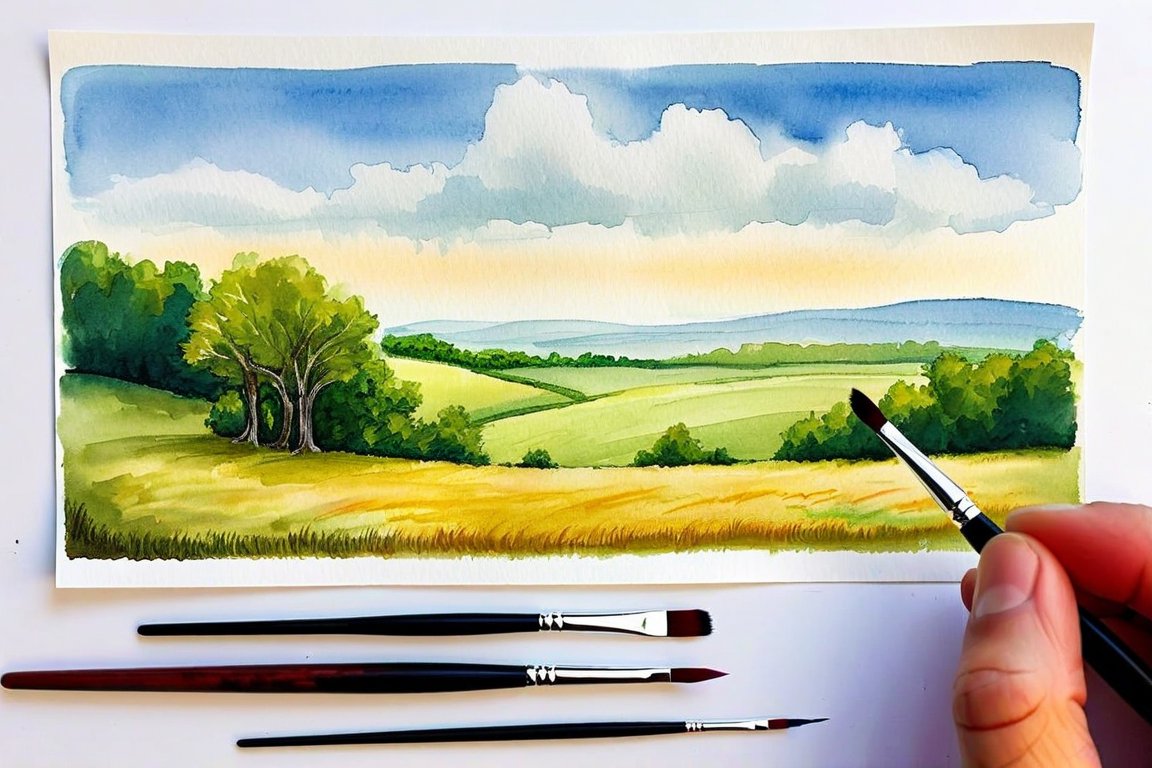
Overview
Embark on a creative journey and paint a simple landscape in just 30 minutes using watercolors. This activity is fun because it lets you explore color mixing and brush techniques while creating a serene scene. Beginners often rush, but remember, the beauty of watercolor lies in its fluidity and unpredictability.
Materials
- Watercolor paper (300 gsm, 9x12 inches / 23x30 cm)
- Watercolor paints (basic set of 12 colors)
- Round brush (size 6)
- Flat brush (1 inch / 2.5 cm)
- Palette for mixing colors
- Two jars of clean water
- Paper towels or a soft cloth
- Masking tape (optional, for clean edges)
- Pencil (HB or 2B)
Time & Difficulty
- Total Time: 30 minutes
- Active Time: 30 minutes
- Curing/Drying: 10 minutes (after painting, optional)
- Difficulty: Beginner
Step-by-Step
- Prepare your workspace by taping down the edges of your paper if you want clean borders.
- Lightly sketch your landscape scene with a pencil. Focus on basic shapes like hills, trees, or a simple horizon line.
- Mix your colors on the palette, starting with a light wash for the sky. Use more water for lighter colors.
- Wet the paper where you plan to paint the sky using the flat brush. This helps in creating a smooth gradient.
- Apply the sky colors with horizontal strokes, blending as you go. Let the colors flow and blend naturally.
- Paint the land by applying a wash of green or brown, adding depth with darker shades for shadows.
- Detail the landscape with the round brush, adding trees or bushes. Use a dabbing motion for texture.
- Add highlights by lifting paint with a clean, damp brush or a paper towel.
- Let your painting dry for at least 10 minutes to avoid smudging.
- Remove the tape carefully if used, pulling away from the paper to avoid tearing.
Pro Tips
- Use two jars of water: one for rinsing brushes and one for clean water to mix paints.
- Test colors on a scrap piece of paper before applying them to your painting.
- Layer colors gradually; it's easier to darken than to lighten.
Common Mistakes
- Overworking the paper can cause it to tear. Be gentle with your brushstrokes.
- Colors bleeding together unexpectedly? Let layers dry between applications.
- Unwanted hard edges? Rewet the area and gently blend with a clean brush.
Safety Notes
- Ensure your workspace is well-ventilated if using masking tape or any solvents.
- Keep water jars stable to avoid spills.
Cleanup & Storage
- Rinse brushes thoroughly and reshape them before drying.
- Store paints and palette in a cool, dry place.
- Dispose of dirty water responsibly, not down the sink if using pigments that could clog.
Next Exercises
- Practice creating different sky effects, like sunsets or stormy clouds.
- Experiment with more complex landscapes, adding water bodies or structures.
- Explore color theory by creating a monochromatic landscape.