Overview
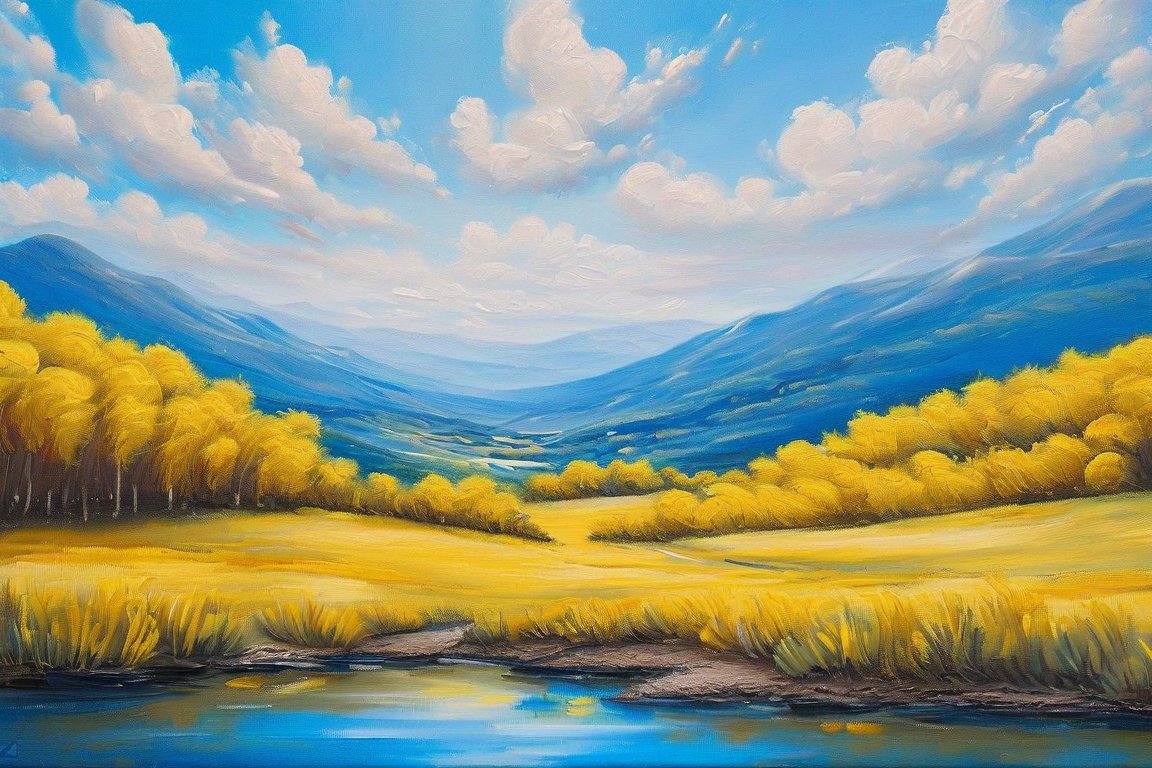
Today, we'll paint a stunning landscape using only three colors. This exercise is a delightful way to explore color mixing and brush techniques while creating a vivid scene. Beginners often worry about color choices, but with this limited palette, you'll gain confidence and learn to see the beauty in simplicity.
Materials
- Canvas, 30x40 cm (12x16 inches)
- Acrylic paint: Ultramarine Blue, Cadmium Yellow, Burnt Sienna (or safe substitutes like Phthalo Blue, Lemon Yellow, and Raw Umber)
- 3 Brushes: 1 large flat, 1 medium round, 1 small detail brush
- Palette knife
- Palette or a disposable plate
- Water container
- Paper towels or a clean cloth
- Apron or old shirt
Time & Difficulty
- Total time: 1 hour
- Active time: 1 hour
- Drying time: 30 minutes after completion
- Difficulty: Beginner-friendly
Step-by-Step
- Prepare your workspace by laying out all materials and putting on your apron.
- Prime your canvas with a thin layer of white paint if desired, and let it dry for a few minutes.
- Mix your colors on the palette. Create a range from light to dark by blending your three colors in different ratios.
- Sketch a simple horizon line lightly with the medium round brush using a diluted mix of Burnt Sienna.
- Block in the sky with Ultramarine Blue, gradually lightening it with Cadmium Yellow as you move downwards.
- Paint the ground with a mix of Burnt Sienna and Cadmium Yellow, varying the tones to add depth.
- Blend the horizon by softly merging the sky and ground colors with the large flat brush.
- Add details with the small brush, like distant trees or hills, using darker tones from your palette.
- Highlight elements with your palette knife, adding texture by lightly scraping Cadmium Yellow onto the surface.
- Assess your painting from a distance and make any final adjustments for balance and composition.
- Let the painting dry for at least 30 minutes before handling.
Pro Tips
- Keep a spray bottle of water handy to mist your palette and prevent the paints from drying too quickly.
- Use the edge of the palette knife to create sharp lines and dynamic textures.
- Step back frequently to view your work from different angles; this helps in seeing the overall composition.
Common Mistakes
- Using too much water can dilute acrylics excessively. If this happens, add more paint to restore vibrancy.
- Overworking the paint can muddy colors. To fix, let it dry and paint over with fresh layers.
- Forgetting to clean brushes between colors can lead to unintended color mixing. Rinse thoroughly and dry with a towel.
Safety Notes
- Use water-based, non-toxic acrylics to avoid harmful fumes.
- Ensure good ventilation if painting indoors.
- Dispose of paint water responsibly to avoid environmental harm.
Cleanup & Storage
- Rinse brushes immediately after use and reshape bristles.
- Wipe the palette with a damp cloth for easy cleaning.
- Store leftover paint in airtight containers to reuse in future projects.
Next Exercises
- Experiment with a monochromatic landscape using shades of one color.
- Paint a seascape to practice blending and creating reflective surfaces.
- Create a night scene to explore contrasting light and shadow.
By Theo Northlake